
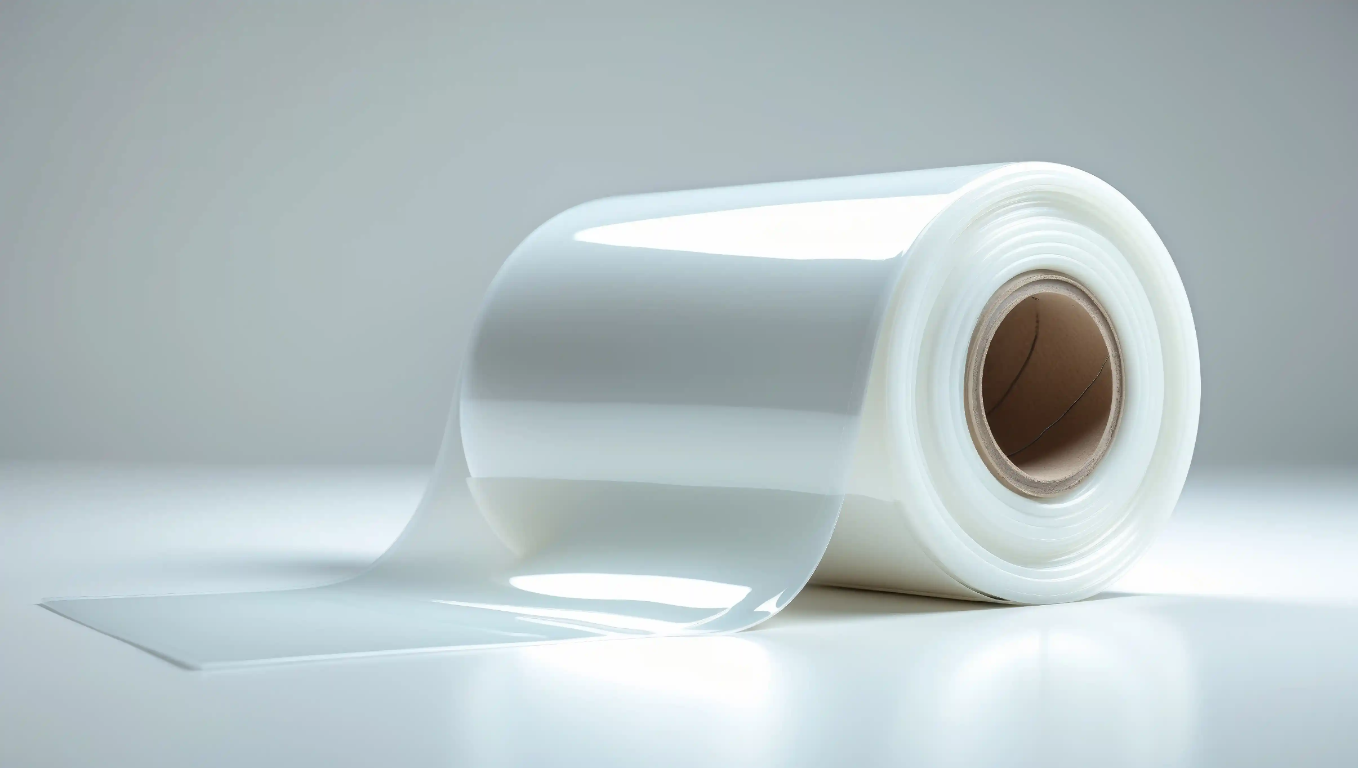
SLIPCHEM E 178 | PRODUCT GUIDE
Slip & Antiblock Masterbatch for Polymer Films: Technology, Benefits, Applications and SLIPCHEM E 178

In modern polymer film production, controlling surface friction and preventing unwanted adhesion between film layers are essential for reliable processing and efficient downstream converting. Slip and antiblock performance can directly influence film handling, roll winding, bag making, packaging, printing, lamination, and other high-speed operations.
A well-designed slip masterbatch helps control the coefficient of friction (COF) between polymer surfaces, allowing film layers to move smoothly against each other. At the same time, effective antiblock performance helps minimize unwanted adhesion between contacting film layers.
For applications requiring both properties, SLIPCHEM E 178 from POLYCHEM is developed as a multifunctional Slip & Antiblock Masterbatch, combining controlled surface friction with improved film-to-film separation.
1. What Is Slip Masterbatch?
Slip masterbatch is a concentrated formulation of a slip additive dispersed in a compatible polymer carrier resin. Instead of introducing a pure or powdered slip additive directly into the production process, the active additive is incorporated into a polymer carrier and supplied in convenient granular form.
This masterbatch approach offers several practical advantages for film manufacturers, including:
- Easier and more controlled dosing
- More uniform additive distribution
- Improved dispersion throughout the polymer melt
- Reduced dust generation during handling
- Cleaner and more convenient production operations
- Better consistency between production batches
Slip masterbatch is particularly important in polymer film production because excessive surface friction can interfere with film movement, winding, bag making, and automated packaging operations.
Understanding the Coefficient of Friction (COF)
The coefficient of friction (COF) describes the resistance between two surfaces when one surface moves relative to the other.
In polymer films, two important measurements are commonly considered:
- Static COF: The force required to initiate movement between two surfaces.
- Dynamic COF: The force required to maintain movement once the surfaces are already moving.
COF can be evaluated between two film layers or between the film and another surface, such as processing equipment.
A high COF can increase film-to-film friction and make handling more difficult. However, achieving the lowest possible COF is not necessarily the objective. Excessively low friction can also reduce control during roll winding, film feeding, and packaging.
Therefore, the objective of an effective slip system is to achieve a controlled and repeatable COF appropriate for the specific film formulation and application.
2. How Does Slip Masterbatch Work?
The performance of conventional slip additives is closely related to their controlled compatibility with the polymer matrix.
During polymer processing, the slip additive is dispersed throughout the molten polymer. As the film cools, the solubility of the additive in the polymer matrix decreases. As a result, part of the additive gradually migrates from the bulk polymer toward the film surface.
This phenomenon is commonly referred to as migration or blooming.
Once the active slip component reaches the film surface, it forms a very thin lubricating layer. This layer reduces direct contact between polymer surfaces and allows the film layers to move more easily against each other.
The result is a reduction in surface friction and improved film handling during downstream operations.
The effectiveness of this process depends on several factors, including the polymer type, formulation, additive system, film structure, processing conditions, and required surface properties. For this reason, slip masterbatch selection and dosage should always be evaluated under the actual production conditions.
3. Slip and Antiblock: Two Important Film Properties
Although slip and antiblock are closely related in film processing, they perform different functions.
Slip Performance
Slip additives primarily work by reducing friction between contacting surfaces. This allows film layers to slide more easily and can improve:
- Film feeding
- Roll winding
- Bag making
- Packaging operations
- Film converting
Antiblock Performance
Antiblock additives are designed to reduce the tendency of film layers to stick together when they are in close contact, particularly under pressure and heat.
Antiblock systems generally create microscopic irregularities on the film surface, reducing the effective contact area between adjacent film layers.
Therefore, while slip helps film surfaces move more easily, antiblock helps prevent excessive adhesion between film surfaces.
Why Are Slip and Antiblock Often Used Together?
Many flexible film applications require both controlled friction and reliable film separation.
Using a slip component alone may not provide sufficient resistance to blocking, while an antiblock component alone does not necessarily provide the desired level of surface lubrication.
For this reason, film formulations frequently incorporate both functions.
However, the interaction between slip and antiblock systems must be considered carefully. Antiblock particles can interact with or adsorb some slip additive at the film surface, potentially affecting the final slip performance.
Consequently, the appropriate balance between slip and antiblock functionality should be established through practical testing using the actual polymer formulation and processing conditions.
4. Applications of Slip & Antiblock Masterbatch
Slip and antiblock masterbatches are widely used in polymer film applications where controlled surface friction and reliable film separation are important.
Typical applications include:
- Blown film
- Cast film
- Flexible packaging films
- Food and industrial packaging
- Agricultural films
- Shrink films
- Stretch films
- Laminated films
- Printed films
- Plastic bags
- Flexible packaging structures
In high-speed forming, filling, and packaging operations, appropriate slip and antiblock performance can contribute to smoother film handling and more stable processing.
For film converters and packaging manufacturers, controlling these surface properties can also help reduce operational difficulties associated with excessive friction or film blocking.
5. Key Benefits of Slip Masterbatch
An effective slip masterbatch can contribute to both film performance and production efficiency.
Improved Film Handling
Controlled surface friction allows film layers to separate and move more easily. This can support smoother film feeding and operation of automated bag-making and packaging equipment.
Smoother Roll Winding
Appropriate surface slip can reduce excessive adhesion between film layers and contribute to more uniform winding. This can help minimize problems such as wrinkles and trapped air.
Improved Downstream Processing
Stable film rolls can be easier to handle during subsequent converting operations such as:
- Printing
- Lamination
- Slitting
- Bag making
- Packaging
Improved Processing Efficiency
Reducing excessive friction between film surfaces and processing equipment can help support stable production conditions and, under suitable processing conditions, may contribute to improved line efficiency.
Consistent Additive Dosing
The granular masterbatch format provides a practical method for incorporating active additives into the polymer process and can help improve dosing consistency between production batches.
6. SLIPCHEM E 178 – Slip & Antiblock Masterbatch
SLIPCHEM E 178 is a multifunctional film additive masterbatch developed by POLYCHEM for polymer film applications requiring controlled surface friction together with improved resistance to film blocking.
Unlike a masterbatch designed exclusively to provide slip, SLIPCHEM E 178 is formulated to provide both slip and antiblock functionality in one product.
This combination is designed to address two important requirements in film production:
Controlled surface friction + improved film-to-film separation
SLIPCHEM E 178 is based on a high-quality slip system dispersed in a polyethylene carrier resin. It is designed for film applications where consistent surface performance is required during processing and downstream converting.
How SLIPCHEM E 178 Supports Film Performance
The slip component contributes to reducing the coefficient of friction between polymer film surfaces. As the active component migrates toward the film surface, it can create a lubricating layer that facilitates smoother movement between contacting film layers.
At the same time, the antiblock functionality helps reduce excessive adhesion between adjacent film surfaces.
The combination of these functions can support:
- Easier film handling
- Improved film separation
- Smoother roll winding
- More efficient bag making
- Stable film feeding
- Improved downstream converting
- More consistent packaging operations
This dual-function approach makes SLIPCHEM E 178 a practical option for film producers seeking both slip and antiblock performance from a single masterbatch system.
7. Why Choose a Combined Slip & Antiblock Masterbatch?
In flexible film production, surface performance must be carefully balanced.
If the COF is too high, film layers may resist movement and create difficulties during feeding, winding, and converting.
If the COF is excessively low, the film may become more difficult to control during certain operations.
Similarly, insufficient antiblock performance can result in film layers sticking together, particularly after winding or under conditions involving pressure and heat.
A combined slip and antiblock masterbatch is therefore designed to address both requirements within one formulation.
SLIPCHEM E 178 provides a combined approach to surface modification by incorporating slip and antiblock functionality into a single masterbatch.
For film manufacturers, this can provide a practical alternative to managing separate additives, while offering a convenient granular format for production dosing.
The appropriate performance balance remains application-dependent and should be evaluated according to:
- Polymer type
- Film structure
- Film thickness
- Processing conditions
- Additive formulation
- Target COF
- Required antiblock performance
- Downstream processing requirements
8. SLIPCHEM E 178 for Film Processing and Packaging
The demands placed on modern polymer films continue to increase as production speeds and downstream automation become more sophisticated.
Film manufacturers require materials that can move smoothly through production equipment while maintaining sufficient control and avoiding unwanted layer adhesion.
This makes the combination of slip and antiblock properties particularly important for applications involving:
Film Extrusion → Roll Winding → Storage → Film Feeding → Bag Making → Packaging
At each stage, uncontrolled friction or excessive blocking can affect process stability and handling.
By combining slip and antiblock functionality, SLIPCHEM E 178 is designed to support consistent film handling across these processing stages.
For manufacturers of blown and cast films, flexible packaging, bags, agricultural films, and other polymer film products, the product can be evaluated as part of a formulation designed around the specific requirements of the final application.
9. Selecting the Right Slip & Antiblock Solution
There is no universal slip or antiblock dosage suitable for every polymer film.
The required level of additive depends on the polymer, film formulation, film structure, processing conditions, and final application.
Important factors to consider include:
Polymer Type
Different polymers can interact differently with slip and antiblock systems. Carrier compatibility and additive behavior should therefore be considered during product selection.
Film Structure
Mono-layer and multilayer films may require different surface-property strategies depending on the function of each layer.
Processing Conditions
Extrusion temperature, cooling conditions, line speed, winding conditions, and subsequent processing can influence additive migration and final surface performance.
Target Surface Properties
The required balance between static COF, dynamic COF, and antiblock performance should be established according to the intended application.
Downstream Requirements
Printing, lamination, slitting, bag making, filling, and packaging can each impose different requirements on the film surface.
For these reasons, SLIPCHEM E 178 dosage should be optimized through practical trials under the intended production conditions.
10. Conclusion
Slip and antiblock performance are important surface properties in modern polymer film production.
While slip additives primarily reduce friction and improve film movement, antiblock systems help reduce unwanted adhesion between adjacent film layers. For many film applications, achieving the right balance between these two properties is essential for reliable processing and downstream performance.
SLIPCHEM E 178 from POLYCHEM is a multifunctional Slip & Antiblock Masterbatch developed to combine these two functions in a single masterbatch system.
Based on a high-quality slip system dispersed in a polyethylene carrier resin, SLIPCHEM E 178 is designed for polymer film applications where controlled friction, improved film separation, and consistent processing performance are required.
Its dual-function approach can support film handling, roll winding, bag making, packaging, and other downstream converting operations.
As with all film additives, optimum performance depends on the polymer, formulation, film structure, processing conditions, and target properties. POLYCHEM provides technical support for product selection and dosage optimization based on the specific requirements of the application.
SLIPCHEM E 178 – Slip & Antiblock Masterbatch
Controlled Friction. Improved Film Separation. Reliable Processing.
For technical consultation, product selection, purchasing information, or further details about SLIPCHEM E 178, contact the POLYCHEM Marketing & Sales Department.